AI agents have had a big impact on product development, and QA is no different. I get asked a lot what that actually looks like in practice, so I want to walk through it.
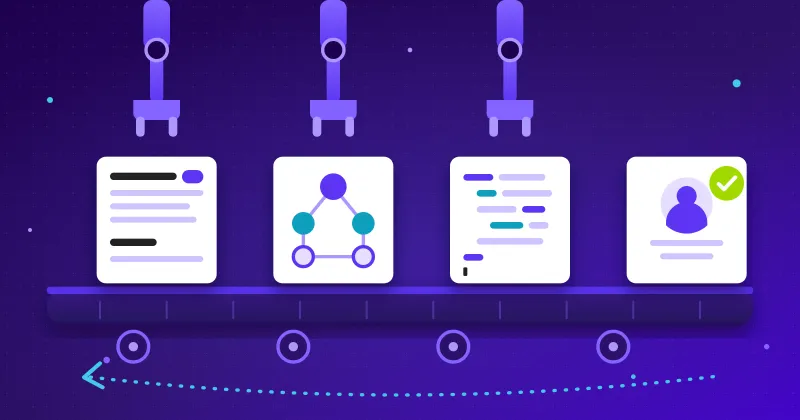
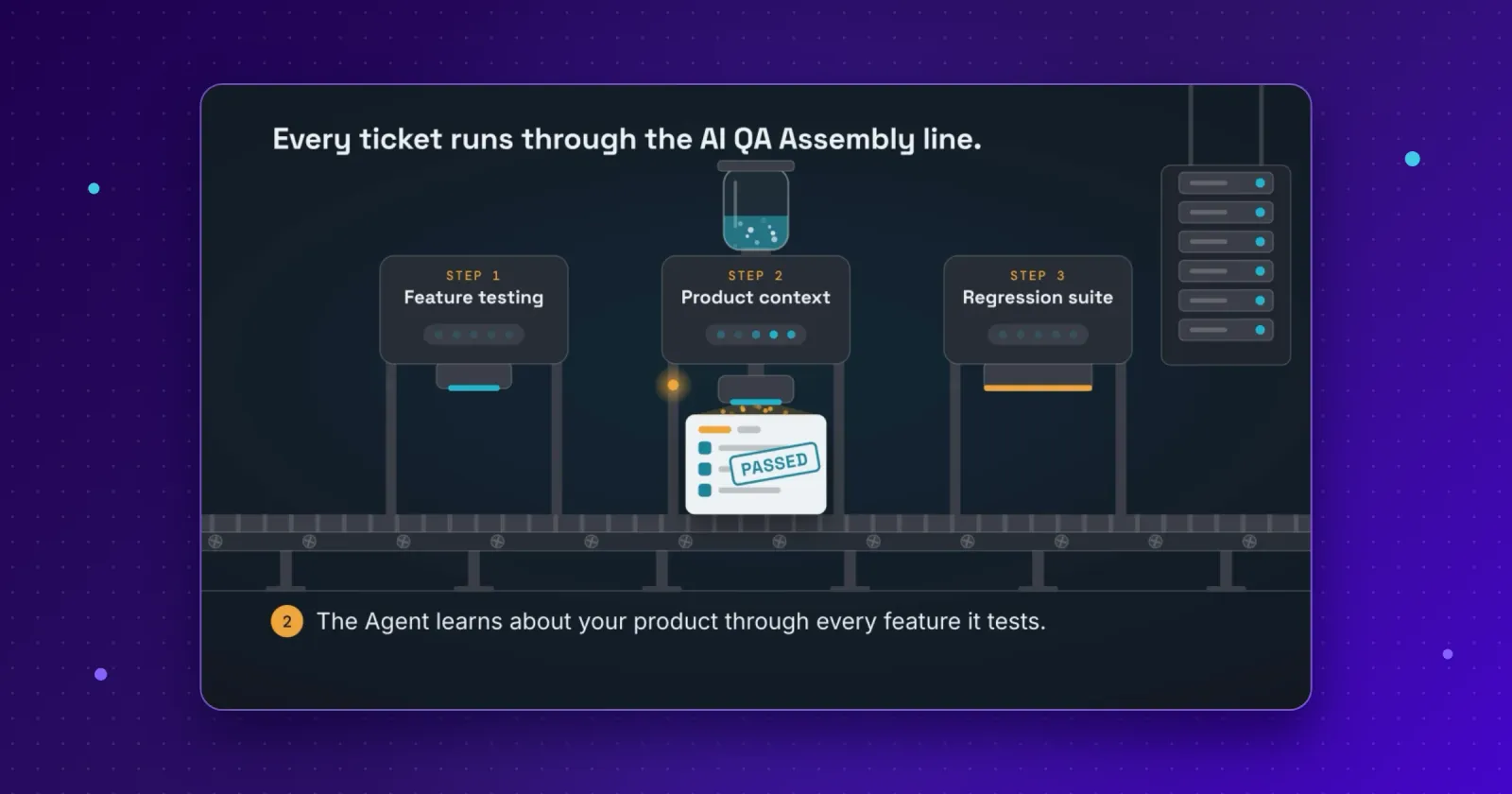
The way I see it, AI agents play three main roles in QA. They test individual features, they build up context about your product, and they maintain a deterministic regression suite. Each one builds on the one before it.
Testing individual features
The first role is the simplest. An AI agent can take a ticket and understand its context. It can understand what the feature is supposed to do and what the acceptance criteria are.
From there, the agent can open a browser or a mobile simulator and actually test that feature. It can document what it did on the ticket, attach screenshots, and then pass or fail it.
These agents are non-deterministic, which means they won't run a test exactly the same way every time. Even so, they are very effective at this kind of testing.
Building product context
The second role is related to the first. As an agent tests your features, it learns more about your product.
It can update its memory, its skills, and its MD file so it understands more about how everything is supposed to work. You can also seed that context yourself with information from the code base, the database, or your own knowledge of the product.
The important part is that the agent keeps learning. Every ticket it tests makes it better at testing the next one.
Maintaining a deterministic regression suite
The third role is maintaining your regression suite. These are the old school tests you would write in Playwright or a similar tool, and they are deterministic. They run the same way every time.
What changes is that the AI agent maintains that suite. As it tests each ticket, it can write a test for that ticket, and those tests are maintained over time.
When you go to do a release, your product runs through that regression suite. You find out deterministically whether everything still passes before your users do.
What you get out of it
The benefits are significant. The first is throughput. Your team will be able to get through more tickets than before.
The second is quality and stability. Because you are testing much more efficiently, you end up with a more solid product at a lower cost and at a much greater throughput.
We can help you set this up
At Rapptr Labs, we have been building this kind of AI-driven QA into how we deliver products. If you are shipping fast and seeing things break on release, or you want to know where AI agents fit into your QA process, reach out to me. I would be happy to talk it through.