Anthropic just released Claude Meetings, and a lot of people have asked me what it actually does and whether it matters. I think it does, and I want to explain why.
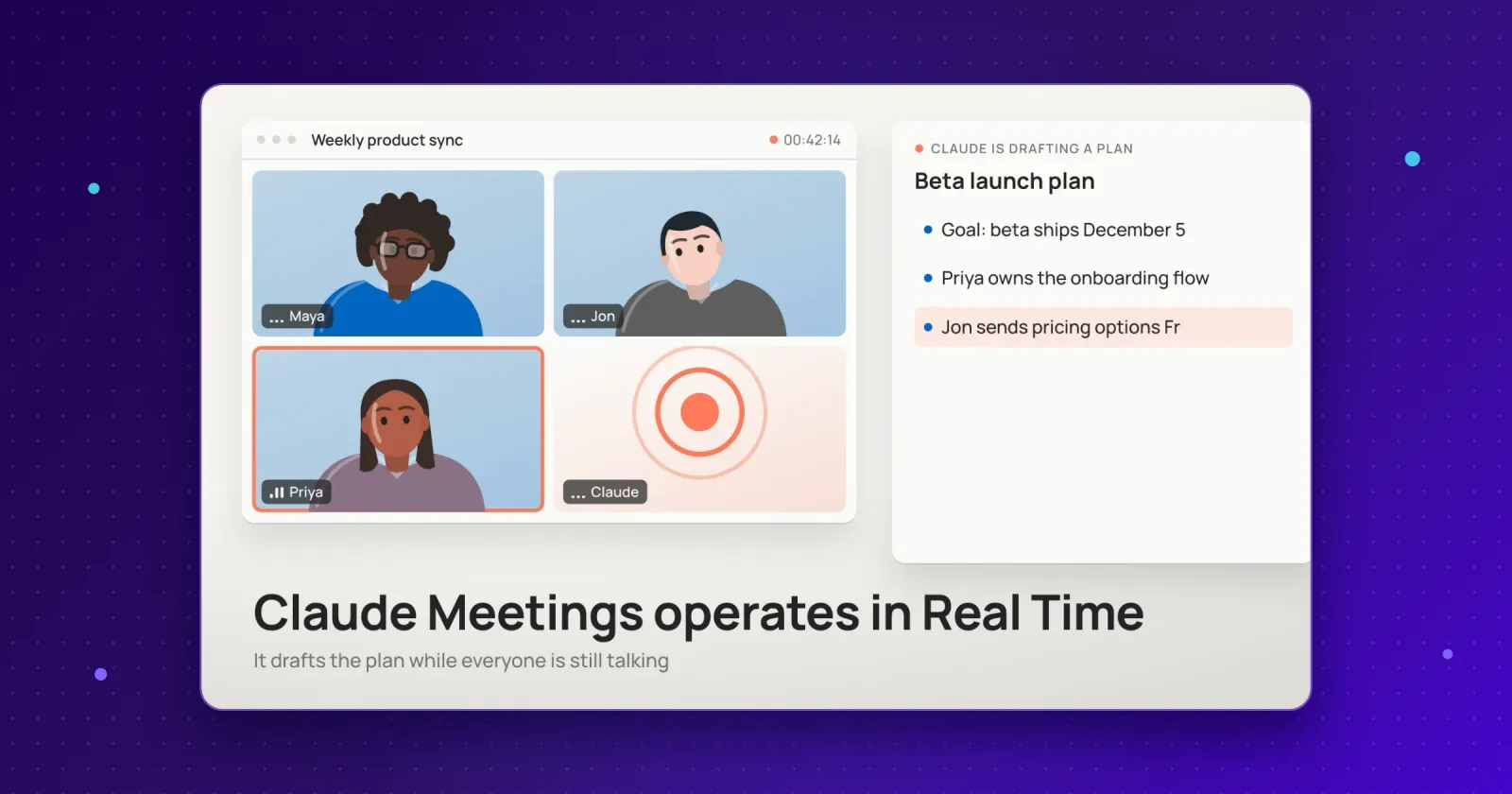
Claude Meetings puts a Claude agent directly into your video calls. It joins as a participant, listens to the conversation, and works on tasks while the meeting is still happening.
What Claude Meetings does
Claude can draft the plan being discussed, map out a timeline on a whiteboard, and answer questions in the meeting chat while people are talking. It can also pull information from your connected work apps in the middle of the call. When the meeting ends, the notes, action items, and anything Claude created are waiting for you in Claude.
It launched in beta for Team and Enterprise plans, and it only works with Google Meet for now. Claude identifies itself as a participant and posts a notice in the chat. By default it won't join calls that include external guests unless an admin allows it.
A real upgrade over AI note takers
If you've used tools like Fireflies or Otter, you know how post-call note takers work. You finish the meeting, and then you go look at the notes. They transcribe the conversation and create action items from everything that was discussed.
That is valuable on its own. But having AI work in real time, which is what Claude Meetings does, is a significant upgrade. The plan exists before the meeting is over.
There are some services already out there that are similar to this. I expect Claude Meetings to get traction anyway, because Claude is already part of how so many teams work.
Claude is moving upstream
The other part I think is significant is that Claude seems to be moving upstream in the product development life cycle.
Until now, Claude has mostly lived in the execution layer. Teams use it to write code, test code, validate it, and release it. It has not been as present in the idea phase, aside from some product managers brainstorming with it on their own.
In product development, most ideas happen in meetings. They come up on calls, at whiteboards, and in conversations between stakeholders.
Cutting out a step
When Claude has a seat at the table in those meetings, it can listen, collaborate, and generate the plan right then and there. The product manager or the stakeholders don't need to take their notes afterward and paste them into Claude to get started.
That removes a step from the process. For a lot of teams, I think this will add real value, and many of them will probably be willing to pay a premium for it.
Getting AI into your product process
At Rapptr, we've spent over a decade building mobile and web products, and AI is now part of how our team plans and builds every day. The tools keep changing quickly, and the teams that get the most out of them are the ones that fit them into a clear process.
If you're trying to figure out where tools like Claude Meetings fit into your product development, reach out. I'm happy to talk it through.